AQL Inspection & Sampling Table
Understand how AQL (Acceptable Quality Level) inspection works — the global standard used by QTI Solutions to ensure consistent, reliable, and data-driven product quality inspections for overseas buyers.
What is AQL?
The Acceptable Quality Level (AQL) is a globally recognized statistical sampling method used to determine the maximum number of defective units allowed in a batch. It ensures that the inspected goods meet a predefined quality level before shipment.
AQL inspection is essential for overseas buyers sourcing from multiple suppliers — it helps evaluate the consistency of manufacturing quality without checking every unit. QTI uses AQL to identify potential risks early and provide accurate, visual inspection data for decision-making.
AQL Levels Used in Product Inspection
QTI follows international AQL levels to classify defects by severity and ensure consistent product quality evaluation across all inspection types.
- Critical Defects: AQL 0.0 — Defects that make the product unsafe or unusable.
- Major Defects: AQL 2.5 — Defects likely to result in product failure or customer dissatisfaction.
- Minor Defects: AQL 4.0 — Small issues that do not affect product performance or functionality.
These AQL levels can be customized based on buyer requirements, product type, and risk category.
These AQL levels can be customized based on buyer requirements, product type, and risk category. Learn more about our Product Inspection Services.
How AQL Sampling Works
AQL sampling ensures that a statistically valid number of products are checked from each lot — providing reliable insights without full inspection.
During an AQL inspection, QTI inspectors randomly select samples from cartons using the internationally recognized ANSI/ASQ Z1.4 (ISO 2859-1) standard. The sample size and acceptable number of defects are determined by the lot size and selected inspection level (typically General Level II).
Based on the inspection results, the shipment is classified as Conformed or Not Conformed according to the number of defects found in the sample.
Explore our detailed Factory Audit Process for supplier verification and compliance.
AQL Sampling Tables
Below are the internationally recognized AQL sampling tables used by QTI Solutions and global inspection agencies to determine the sample size and acceptance criteria during AQL inspections. These tables follow the ANSI/ASQ Z1.4 (ISO 2859-1) standard, helping inspectors and buyers decide how many units to check and how many defects are acceptable in a given lot size.
The first table helps determine the sample size code letter based on total lot quantity and inspection level. The second table provides the acceptance and rejection numbers for Critical, Major, and Minor defects.
These visual charts are the same reference tools our inspection team uses during on-site product inspections.
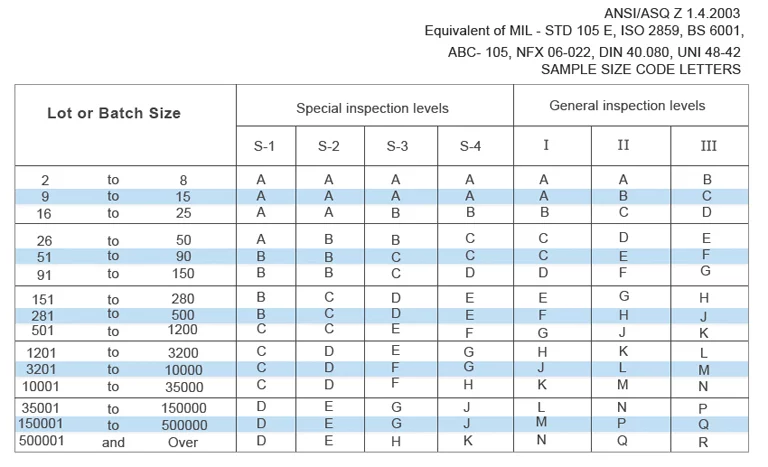
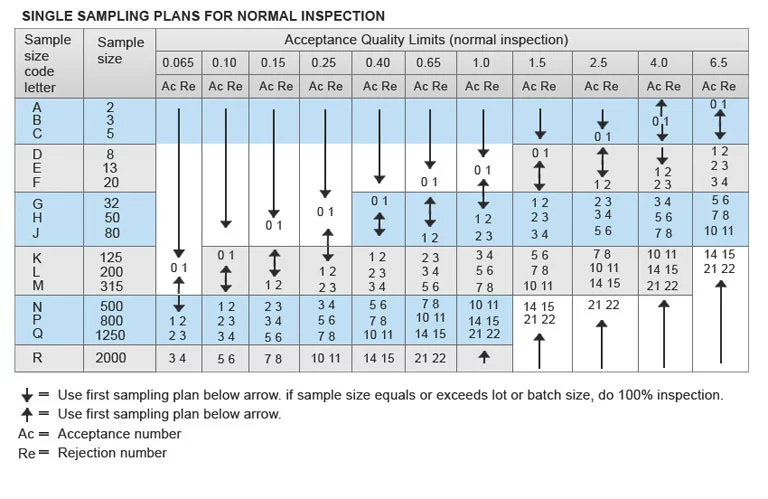
Tables are based on Normal Inspection, Single sampling Plan , the most commonly used level for product inspections. Custom levels can be applied depending on buyer specifications or product sensitivity.
Need AQL-Based Inspection Support?
QTI Solutions offers professional AQL inspection and sampling services to ensure your product quality meets buyer standards — every time, across India and South Asia.
Book an Inspection